
Branded and packaged edible oils are currently selling at around 50 per cent premiums over their loose varieties. Hence, products using edible oils would be costlier going forward.
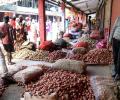
People in the know said plans were afoot to begin the sale of all food grains through online, with a major quantity through auctions that would be later extended to other commodities.

'Now, because of COVID-19, we have become the only way to learn.'

'When a person is capable of infecting 50 others, will you think about the privacy of the person or about protecting the lives of people?'
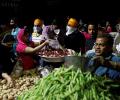
The government of Maharashtra decided to shut operations at APMC Vashi mandi between May 11 and 17 after confirmed cases of Covid-19 surpassed 80 in the APMC and over 450 across Navi Mumbai, where the mandi is located.
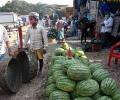
Vashi APMC traders see supplies to Mumbai impacted over movement curbs. A number of trucks sent to Mumbai from the market has reduced from 600 per day in recent times to around 300.

Normally, kharif sowing of vegetable seeds starts during the first week of May across the country. Farmers start preparing their fields to make them suitable for kharif sowing during the second fortnight of April. Now, however, faced with the lockdown, farmers are in a hurry to clear their fields of rabi crop and prepare for kharif planting. With a normal monsoon forecast this year, they are doing all they can to take advantage of pre-monsoon showers.

What is aggravating the situation is that e-commerce firms are facing huge shortage of delivery personnel. They have not been able to bring back their staff to work, despite offering higher pay and Covid-related insurance packages.
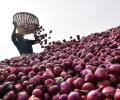
The model or average price for a kg of onion was Rs 6 on Monday -- the lowest in this late kharif and rabi harvesting season, so far. While poorer quality kharif onions traded at Rs 3 a kg, the price of export quality was Rs 9 a kg.

However, many of these firms were facing an uphill task of convincing the people on the ground to return to work, as many are apprehensive of their safety.
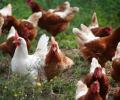
Farmers in the two states have reportedly begun culling chickens, while the state governments have restricted supply of chicken across their borders.
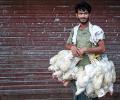
Weak demand from the poultry sector has resulted in a sharp decline in feed prices too, with both soybean and maize prices falling by nearly 25 per cent in the past two months. The poultry market consumes around half of soybean and maize production in India.
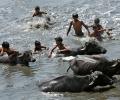
Since 2013-14, buffalo meat had been the largest export item in the agri commodity basket for a few years. Since the coronavirus outbreak in January, Indian exporters have received no fresh orders from Southeast Asian and West Asian countries, which cumulatively contribute nearly 65 per cent of India's overall buffalo meat shipment.
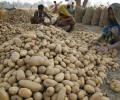
Farmers reported a massive crop damage in transit in addition to huge quantity of the potato left unharvested due to mud in the field.

At the benchmark Lasalgaon Agricultural Produce Market Committee (APMC) mandi, the model onion price shot up to Rs 21.50 a kg on Thursday, as against Rs 16.50 a kg on Wednesday. This was the highest since February 11.

Demand has also jumped from abroad, including the European Union and America.

'If the RBI blesses us with a banking licence, we would like to launch a successful bank.'

Why millennials are choosing silver over gold this Valentine's Day.
Since coronavirus broke out in a few cities in China and a couple of cases were spotted in India as well, rumours claimed for the first time that it was carried by birds.
Data from the Nashik-based National Horticultural Research and Development Foundation showed that onion was trading at at Rs 24 a kg on Tuesday in the benchmark Lasalgaon mandi in Nashik district of Maharashtra. That's a fall of four per cent since Monday and 40 per cent from Rs 40 a kg on January 20, a level not seen since November 6, 2019. It continues to sell at Rs 40-44 a kg in retail markets across the country.
 © 2025 Rediff.com - Investor Information - Advertise with us - Disclaimer - Privacy Policy - Sitemap - Feedback - About us - Terms of use - Grievances